
20/11/2025
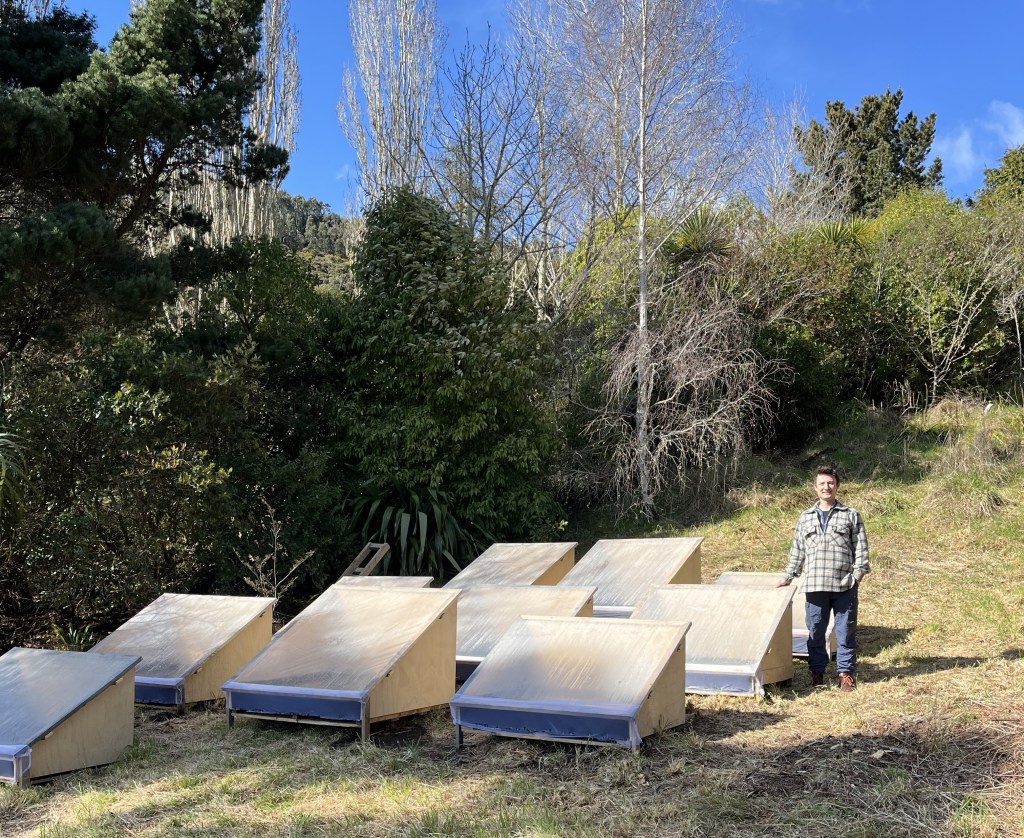
Hello! Here is an update on how things are going with Blueskin Bay Salt. Ten evaporation pods were set up in Blueskin Bay in September, with the first batch of salt started shortly after. This batch of salt was useful to have for the verification process, with the verification appointment going really well. The verifier was very happy with the processes I am following. Following verification, the sunshine in Dunedin was less than ideal, resulting in the first batch taking quite a while to finish evaporating, as this process relies heavily on sunshine.
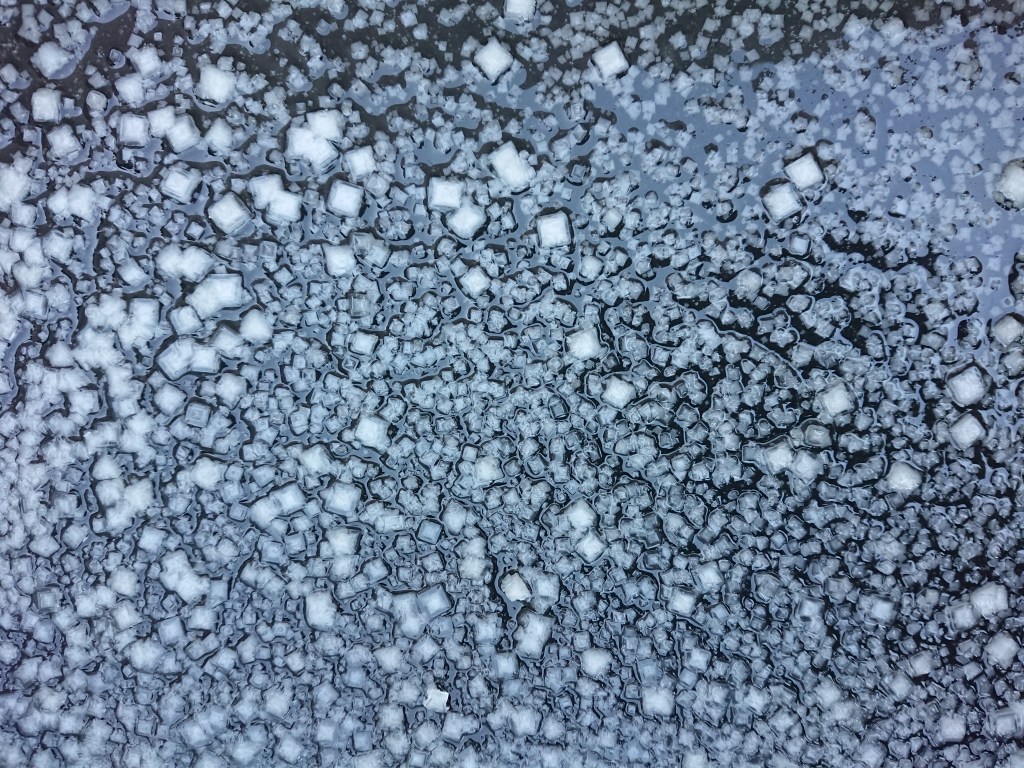
Once some salt had formed, I was able to send samples away for some final testing required for verification. These were testing for total faecal coliforms, heavy metals, and for the sodium content of the salt, which is used to calculate the sodium chloride content of the salt. This is a photo of the salt forming in one of the evaporation pods, creating perfect square salt crystals.

When I harvested the first salt for this testing, I noticed it had tiny brown flecks on the salt crystals, giving the salt a brown colour compared to the white colour of previous batches. The salt also unfortunately had an unappetising smell. When I dissolved some of the salt in freshwater, it left behind tiny brown crystals. These had never been present before in the previous batches of salt I’ve made, and I suspected that the cause was the reused oak wine barrels I’ve used to put the seawater in.

Before going into the evaporation pods, the seawater is kept in reused oak wine barrels to facilitate sedimentation and let any particulate matter settle to the bottom of the barrels. I think what has happened is that residual wine and tartaric acid from the oak barrels has leached from the wood and formed calcium tartrate crystals, otherwise known as “wine diamonds”. These are naturally occurring crystals in the winemaking process, and although safe to consume, the salt does have an unappetising smell.
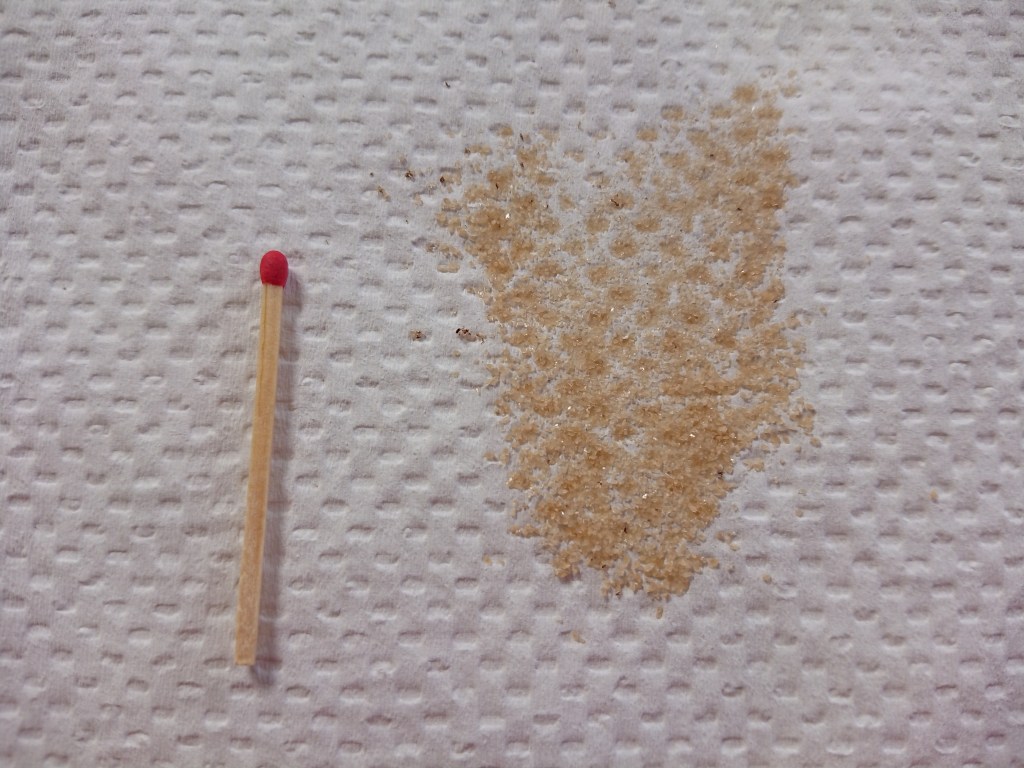
This is a photo of the mystery crystals, which feel like sand. These crystals have also meant that the first batch of salt actually has too little sodium, as these crystals are taking up space in the testing samples. Salt is required to have a sodium chloride content of 970 g/kg, which would be around 382 g/kg sodium. This first batch of salt has come back at 330 g/kg sodium, which would be around 838 g/kg sodium chloride, which is too low. Although the sodium content is too low, the levels of heavy metals such as arsenic, cadmium, and lead are below the maximum level for salt, which is great news!
Due to the first batch of salt having a sodium chloride content that is too low, and an unappetising smell, I will sadly have to discard this first batch of salt. I have purchased some new food grade barrels to store the seawater for the initial stages of future batches, and will start a new batch of salt as soon as I can. I will likely not have salt to sell before the end of this year, as this project is taking a bit of a back seat at the moment because I am getting married this month!
This first batch of salt has been a great learning experience and demonstrated that the process I’m following can produce a good amount of salt, and with safe levels of heavy metals and faecal coliforms, and has shown me some things that can be tweaked to improve the process. The second batch of salt will be started in December 2025! Thank you to everyone who has supported this project, we’re well on the way to producing delicious and local salt!
 Blueskin Bay Salt